Catalog overview

You can access Courses from the Confluence menu bar under apps to get the global catalog overview, which gathers content made in different spaces.
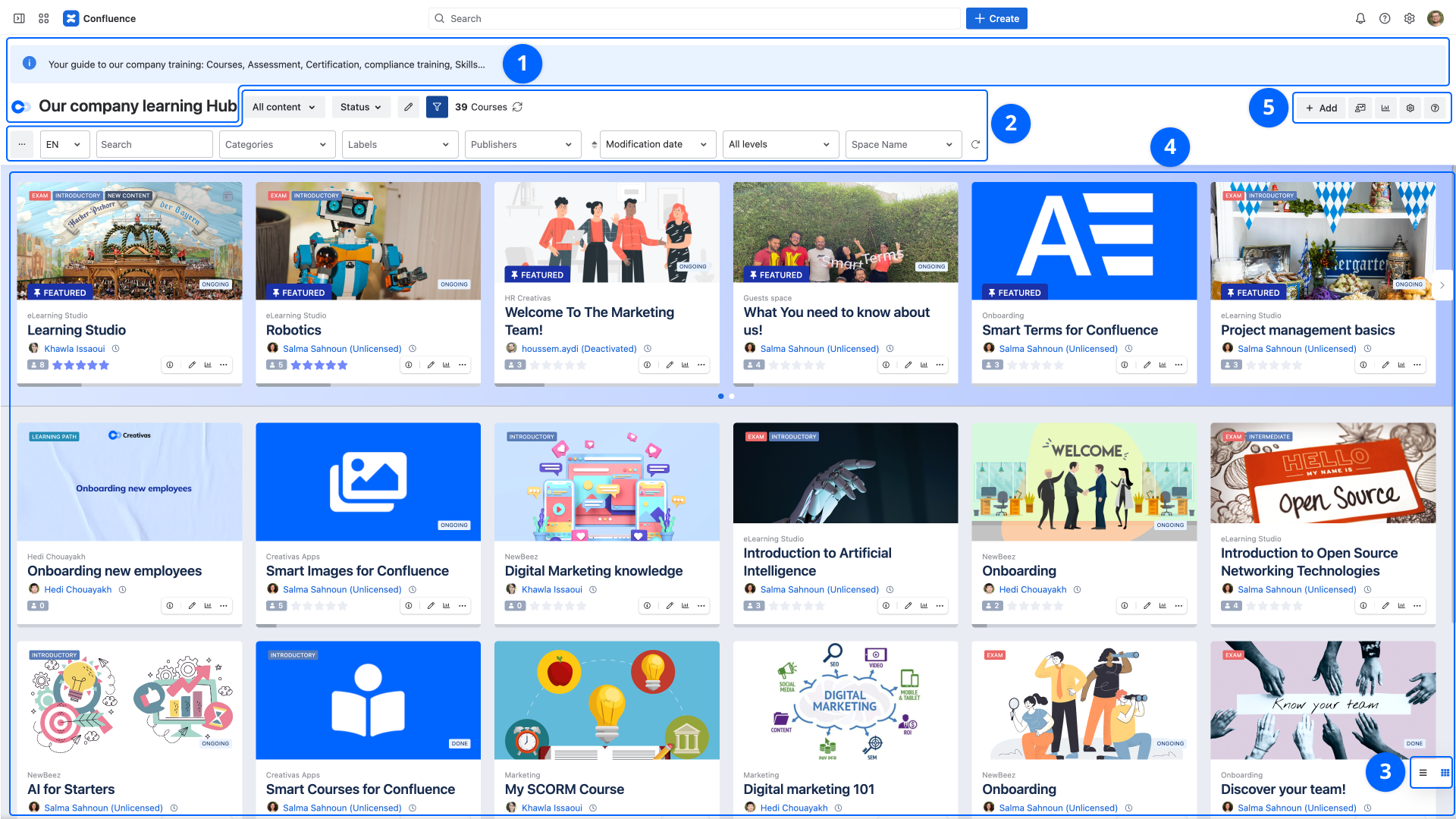
You can access the space catalog from the space sidebar menu under Courses. When a catalog is viewed within a space context, only content created within that space will be displayed.
1. Catalog branding
From the app configuration, you can customize the catalog title, logo and announcement.
2. Catalog filters
The catalog offers several filtering options.
The content number indication on the left side changes depending on the filters used.
The list can be reloaded using the Refresh button.
Content type filter
- All content: displays all courses and learning paths, which the user has the right to view
- Courses: displays all available courses
- Learning paths: displays all available learning paths
Status filter
- Done: displays completed content
- Ongoing: displays content that the learner has started
- Assigned: displays assigned courses
- Favorites: displays the courses bookmarked by the user
Under the Ongoing tab, learners can enable the Recurrent toggle to display only the recurrent courses that they have attended.
Edit mode
Display a list of all content that the user can edit
In the Edit mode, you can enable the Draft toggle to display only unpublished content.
More filters
The second filtering option is through the following list:
- Difficulty levels: All levels is the default value
- Categories
- Labels
- Contributors
- Search input
- Space name
- Language: Available when multi-language is enabled
You can choose which filters to show or hide on the catalog. Hidden filters are not applied to the list by default, except for the sort type and language.
The sorting criteria are:
- Order: ascending or descending

- Name: sort content in alphabetical order by their titles
- Popularity: popularity depends on the number of learners
- Publication date: date of publication of the content. If content is unpublished and then republished, the last publication date is taken into account
- Modification date: date of the last modification of the content
- Rating: displays the content according to their ratings
The reset button returns the catalog filters to their default values.

You can combine filters using the following rules:
- Combine multiple variables of the same filter: Every content containing at least one of these variables will be displayed in the list
- Combine multiple filters: Only content containing all chosen filters will be displayed in the list
3. Display modes
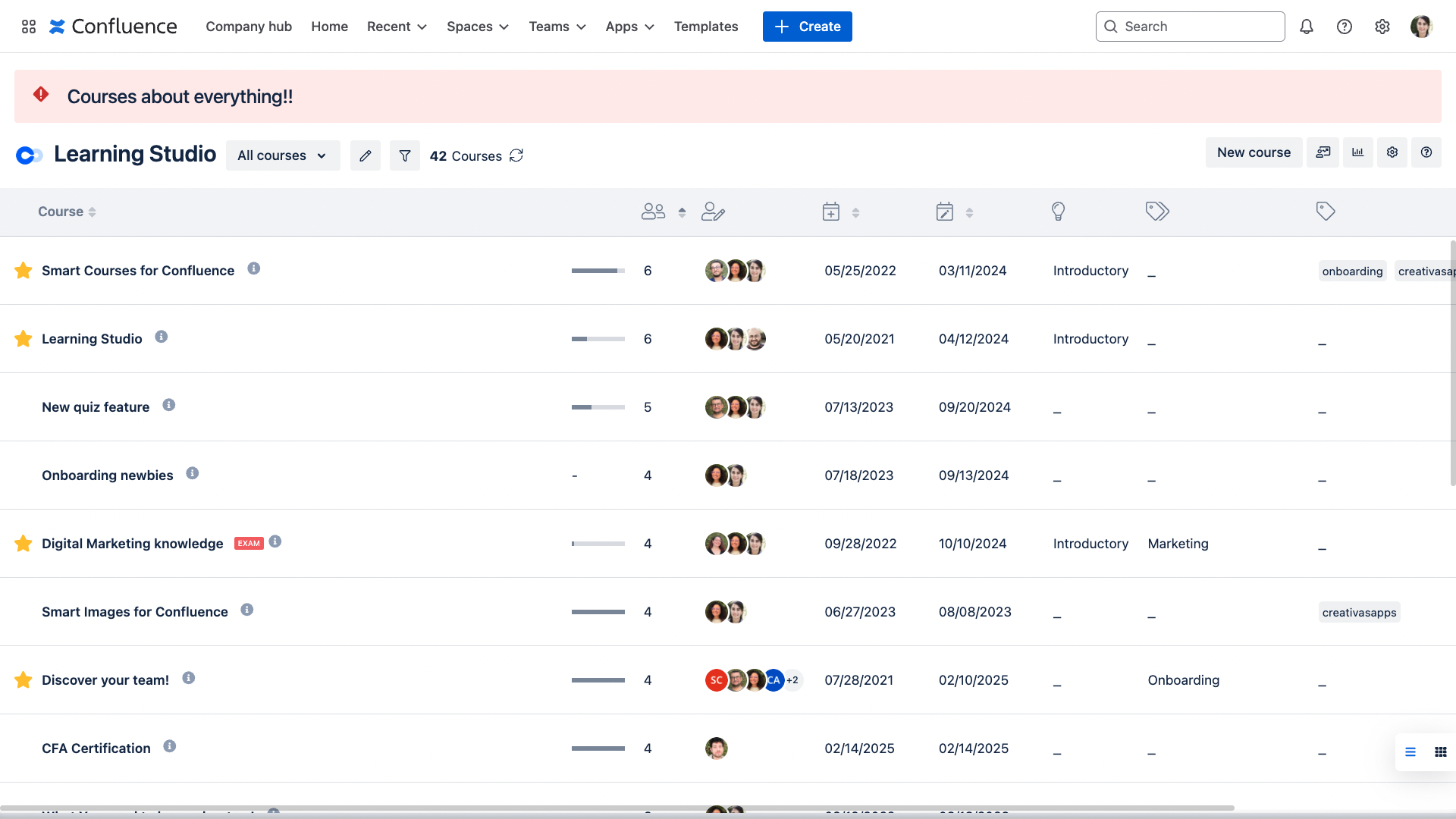
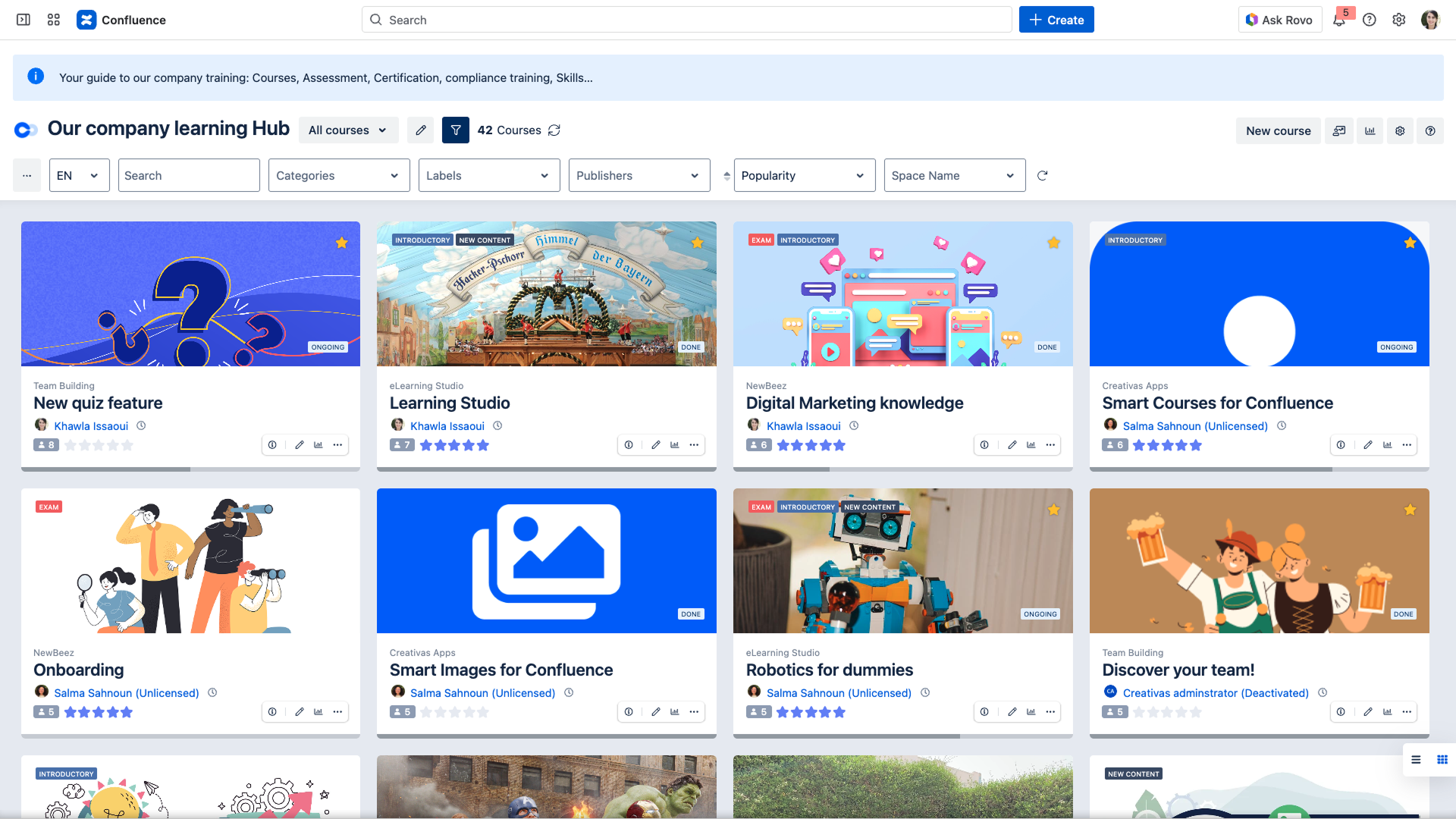
Two different catalog display modes:
List view
Grid view
4. Content list
The cards are displayed in the list, which allows users to interact with content (visit, edit, access insights, etc.). The structure of cards is explained in the next section.
Smart Courses offers infinite scrolling to go through content easily; the app loads more content as the user scrolls down.
5. Actions
Through this page, the user can navigate to other modules of Smart Courses:
- Add: create a new course or a new learning path by adding a title and choosing a target space.
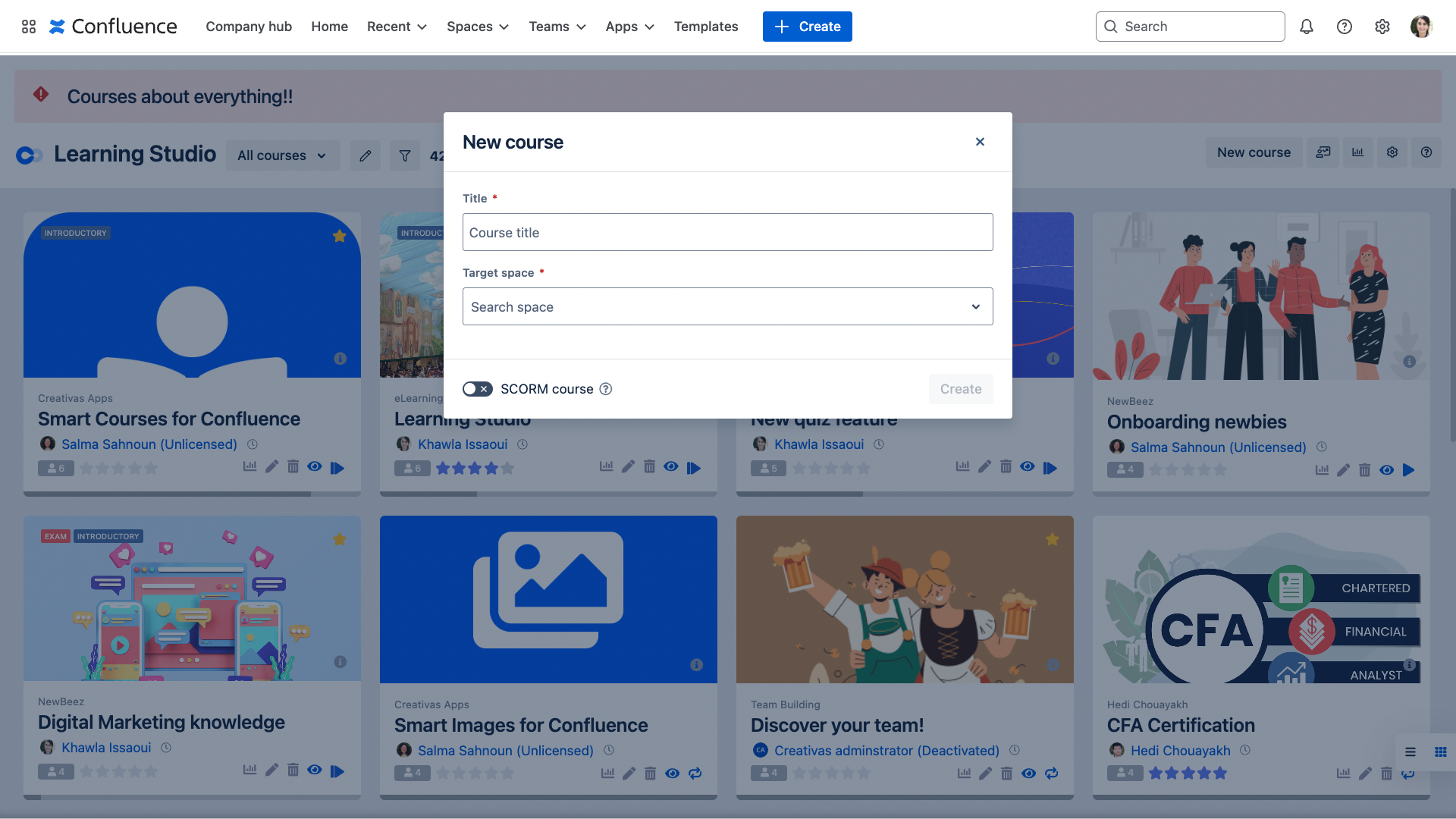
By enabling the SCORM course toggle, you will be able to upload SCORM packages.
- User insights: access user insights
- Global insights: access global insights
- App configuration: access the configuration of Smart Courses
These actions depend on the role of the logged-in user:
| Add | User insights | Global insights | Global App configuration | Space App configuration | |
|---|---|---|---|---|---|
| Confluence Admin |  | ⬤ | ⬤ | | |
| Space Admin | | ⬤ | ⬤ |  | |
| Smart Courses Admin | | ⬤ | ⬤ | | |
| User who is authorized to create content | | ⬤ | ⬤ | | |
⬤ Check insights view permissions